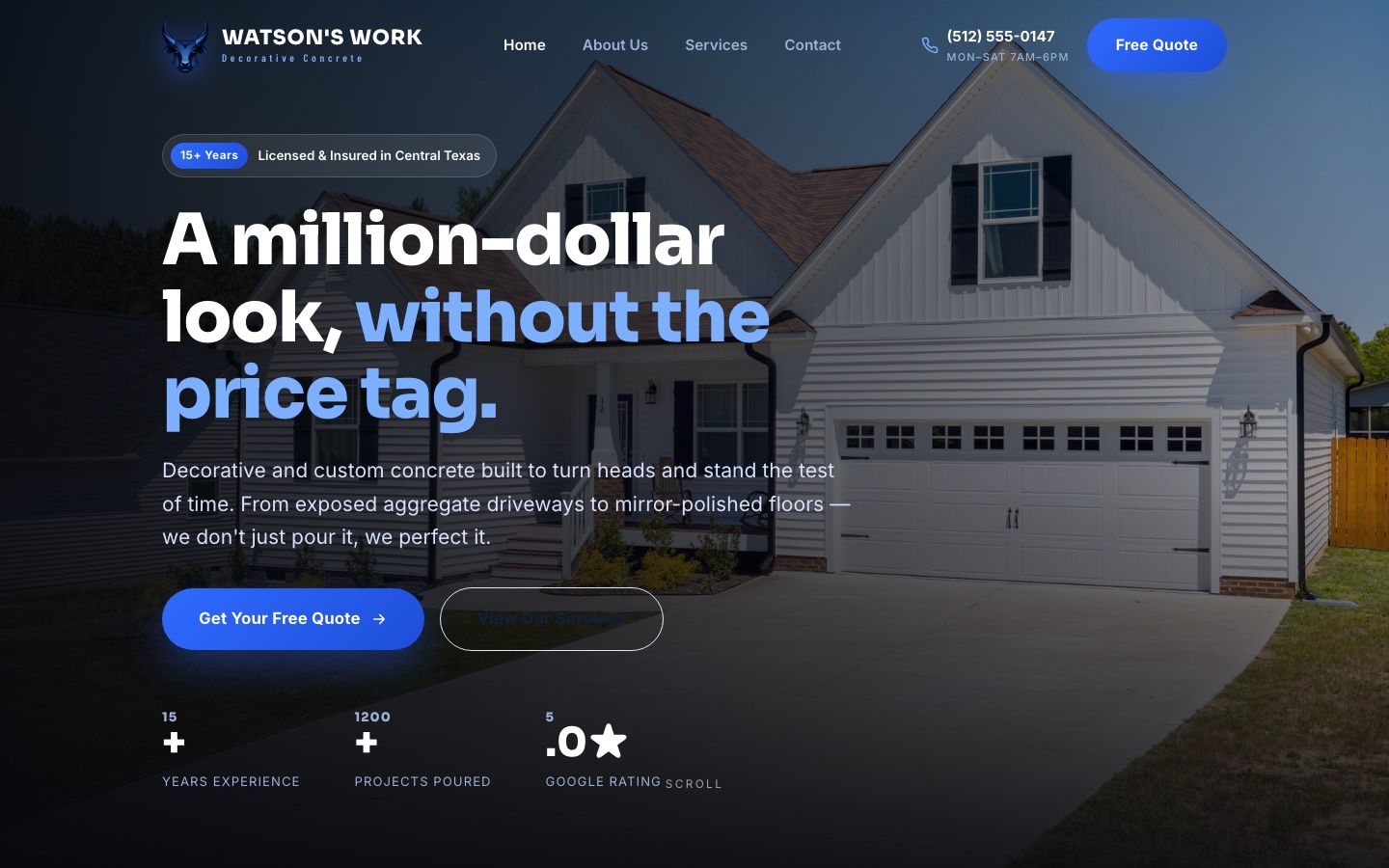
Context
A small trade business in Texas needed a site that would win local jobs: show the work, explain the process, answer the usual questions and make it easy to call. It also needed to be something the owner could host cheaply for years and hand to any future developer without a toolchain conversation. Those two requirements point at the same answer.
What I built
A complete conversion structure on the home page
Hero, services, process, testimonials, FAQ and calls to action, in that order, because a homeowner comparing contractors wants to see the work, understand what happens next, hear from previous customers and then get in touch. Supporting pages cover the individual services and contact.
Deliberately zero dependencies
Plain HTML, CSS and JavaScript, hostable on anything: Netlify, Vercel, GitHub Pages, S3 or shared hosting. No package manager, no build, nothing to go stale. For a business whose website is a brochure and a phone number, this is the correct amount of engineering.
Decisions worth noting
- Simplest adequate stack. Most of the projects in this portfolio are platforms where the framework earns its place. This one is the opposite discipline, and it is just as deliberate: the cost of a framework here would be paid by the client every year in hosting, updates and developer dependence, for no benefit a visitor would notice.
- Performance by omission. With no JavaScript framework to ship, the page is fast on a phone on a job site, which is where a contractor's customers actually look them up.
Why it is in the portfolio
Two reasons. It is international client delivery (a US market business, not a UAE one), and it demonstrates judgement about when not to reach for the tools I use everywhere else. Anyone hiring a technology lead should want both.